How I Run Product Discovery
Product discovery is often rushed, faked, or skipped. Teams think there's no time, or that someone already has the winning idea, or that if engineering can build it in a month it must be right. Here's how I made discovery fast enough and visible enough so teams didn’t skip it.
My role: Product coach, design leadership
Outcome: A repeatable discovery practice used across 4 feature teams, data-driven and time-boxed.
Why Discovery Gets Skipped
Product discovery isn’t skipped because teams don't value it. It gets cut because it looks slow, it's invisible on a roadmap, and it's hard to defend when a backlog is full. My practice is built to answer those objections, while keeping discovery grounded in real evidence.
Start with data
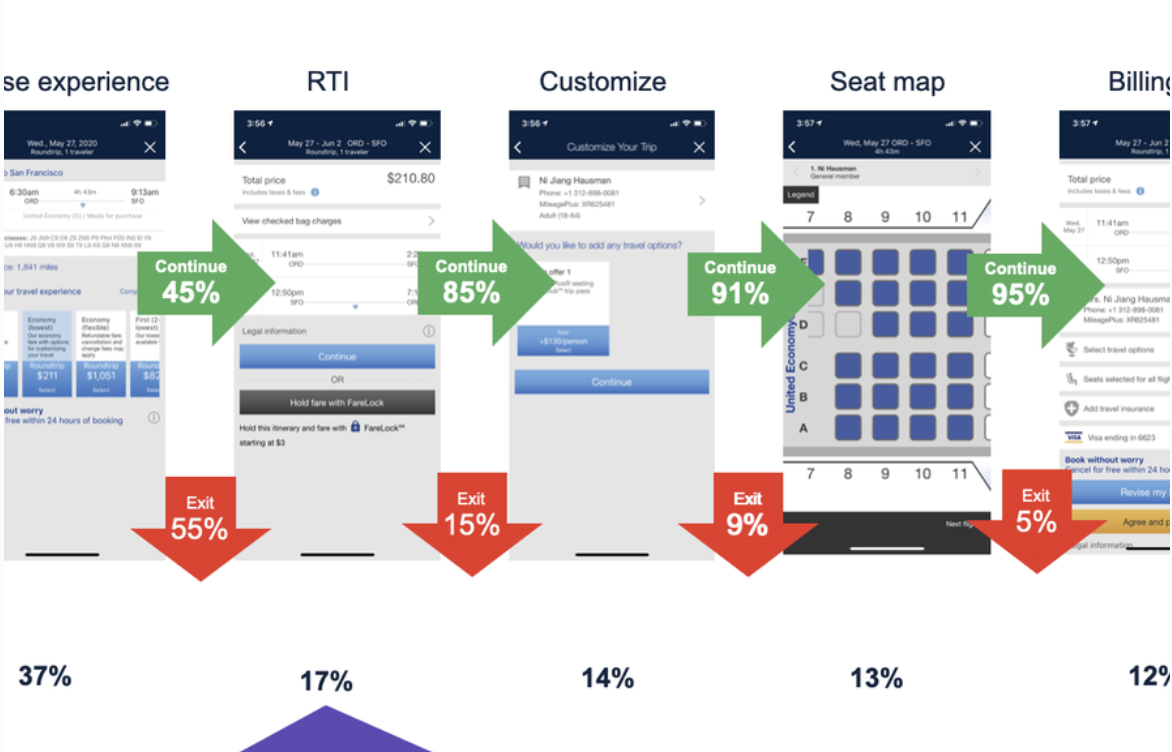
I push the design teams I lead to dig into the data. Conversion funnels are an especially good starting point: they expose likely usability problems that can be explored with A/B tests or small technical investments.
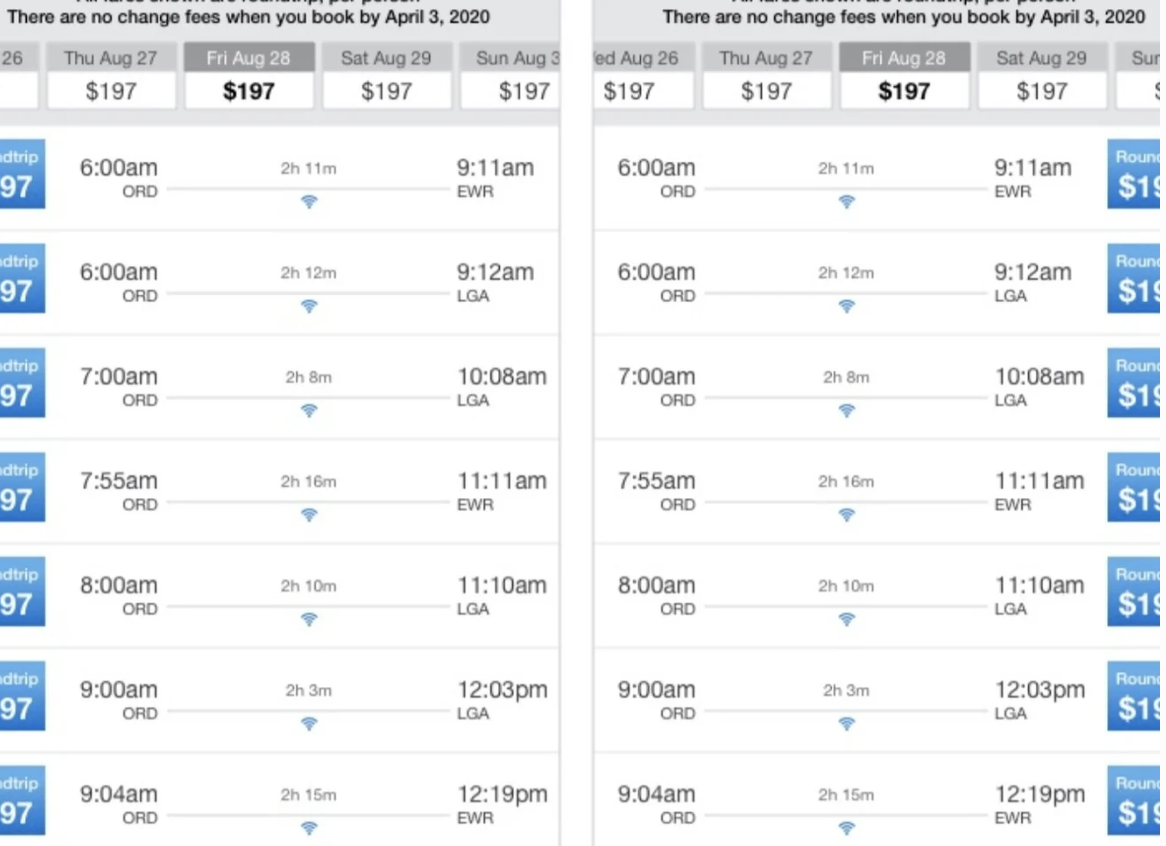
In practice: While at United Airlines, we found our mobile app's conversion funnel showed users dropping off when browsing flight selections. That led to a testable hypothesis: if we move the buttons to the right, within thumb reach, we might improve usability and conversion.
But also talk to users
Data shows what users do but it doesn’t tell you what they are thinking and feeling. It shows you behavior patterns but not behavior drivers. Pairing the quantitative (what happened) with the qualitative (why it happened) unlocks powerful insights that can lead to true customer value.
In practice: While at United, when the pandemic upended air travel, I had our research team run a remote study on how customers felt about flying, talking to over 40 customers. Cancellations were at an all-time high and we knew from data that people were hesitant to fly. Through our research findings, we identified the need for a new feature that would help customers navigation travel during the pandemic. The Ready to Fly page went live in July 2020 and served as the foundation for United’s current feature the Travel Ready Center.
Keep it time-boxed
There are many ways to time-box discovery. I have used the Google Design Sprint framework as it can flex up or down depending on the audience size and timeframe. When discovery takes 5 days instead of a month, "we don't have time" stops being an argument.
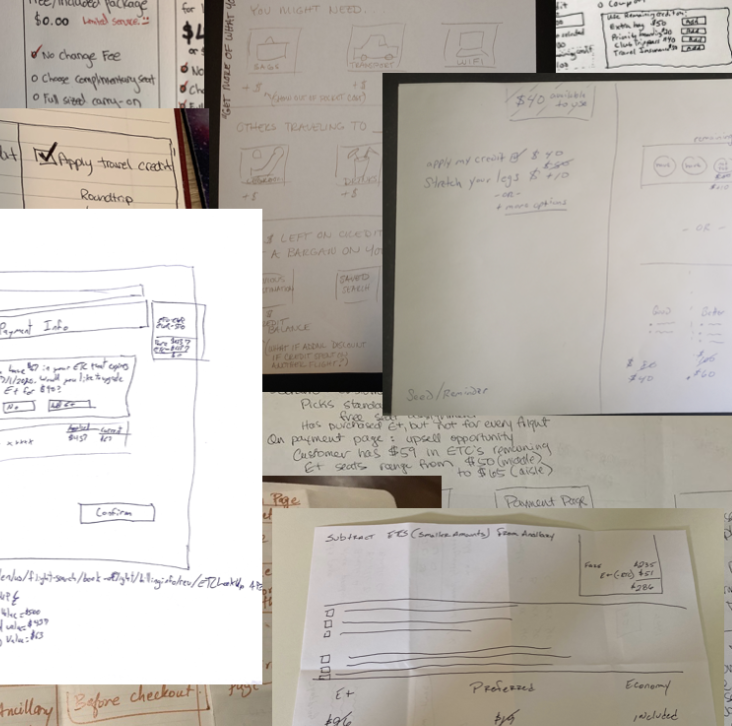
In practice: While at United, I facilitated my first virtual ideation session where the team sketched solutions on paper, submitted them to me through chat and then we discussed remotely. By the next day, we had low-fidelity designs ready.