Scaling AI for Cross-Functional Feature Teams
Multiple feature teams shipping on a single platform. Four product leaders with different goals and different visions for AI. A mandate to be "AI-first" that, in practice, landed on one team. So how do you get everyone rowing in the same direction?
My role: Initiative sponsor, framework design, leadership
Outcome: The AI Toolkit, a framework for deciding where and how AI belongs in a product, paired with design system components. Rolled out to more than 100 people across product, design, and engineering.
The Ask
Leadership asked me to make our existing AI conversational chat feature more discoverable from the legacy platform. But usage wasn't low because people couldn't find the chat feature. It was low because a single chat interface was being asked to serve every task in the product. Making it easier to find would just put the wrong tool in front of more people.
The Reframe
Every feature team had been told to think AI-first. But in practice, every AI idea was being handed off to the one AI team in the org. Add to that four product leaders, each with a different vision of how users should experience AI in our platform.
Teams didn't need another mandate. They needed a shared way to decide where and how AI should could show up in their product domain and provide value to our users. They needed tools to help them think through all the possibilities and a little inspiration. One AI interaction model doesn't fit every user need or task. What a user is doing, and when they do it, determines the kind of AI interaction that serves them in that moment.
The Toolkit
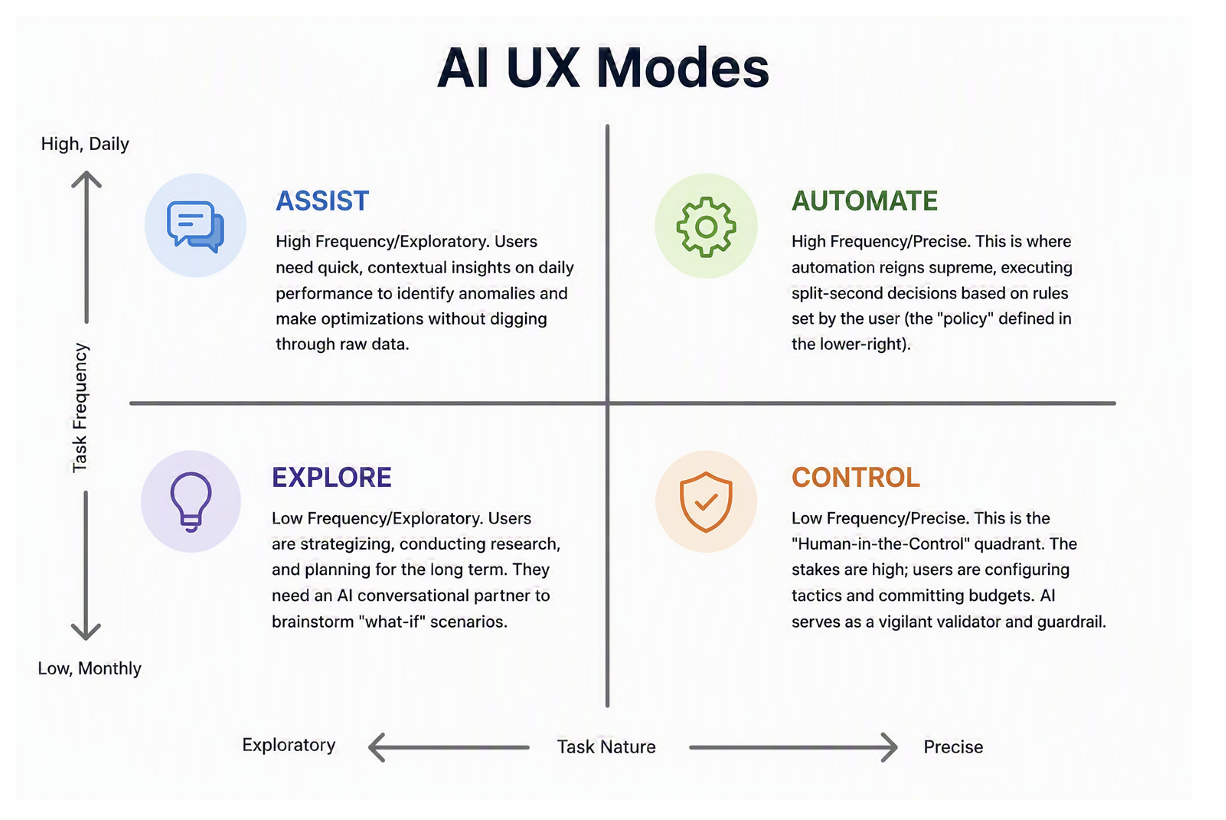
I used Claude as a thinking partner to develop and pressure-test my ideas, applying it to real user tasks. I knew I wanted to give feature teams a thinking tool that was approachable and easy-to-use. The AI UX Modes Framework maps interactions on two axes: how often a task happens and what kind of task it is, which yields four modes. Each describes a different relationship between the user and the AI:
Explore: Users are strategizing, researching, and planning long term. AI is a conversational partner for what-if scenarios.
Control: The stakes are high; users are performing infrequent but highly precise tasks. AI acts as a validator and guardrail while the human stays in charge.
Automate: AI executes fast, repeated decisions within the rules the user has set.
Assist: Users get quick, contextual insights and recommendations for the tasks they perform most often.
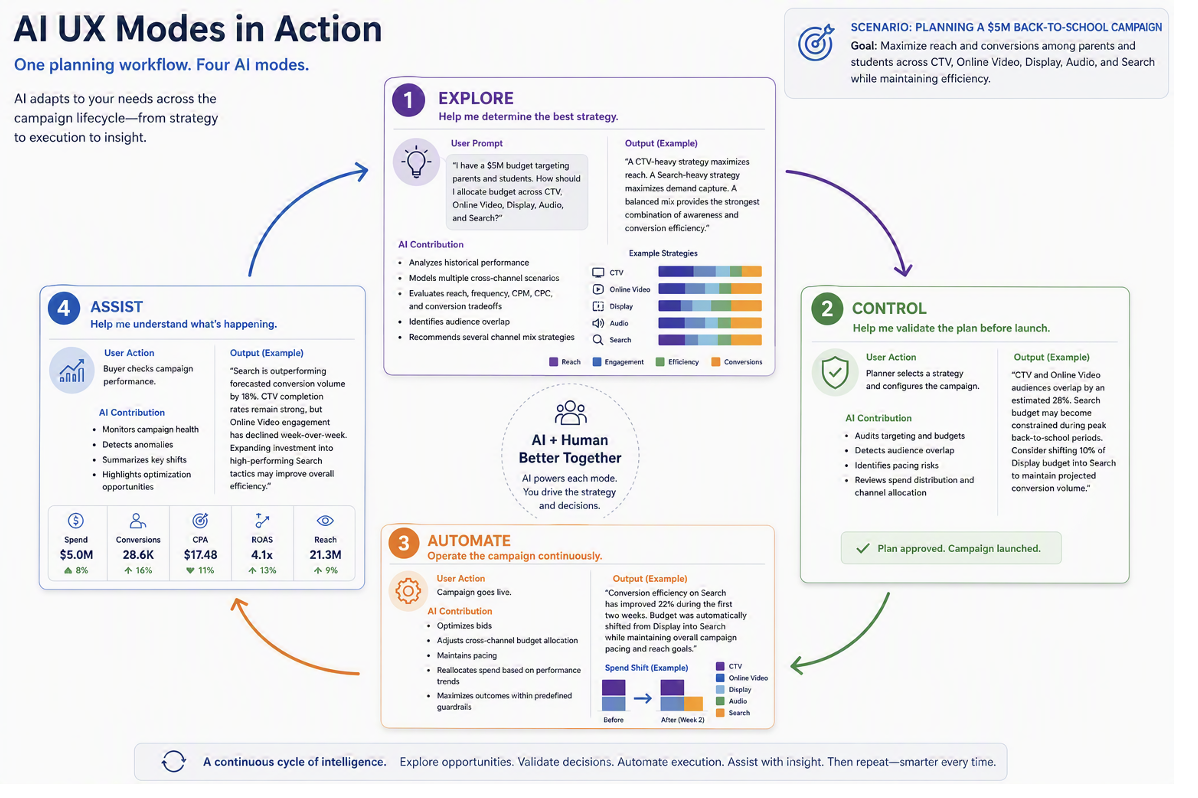
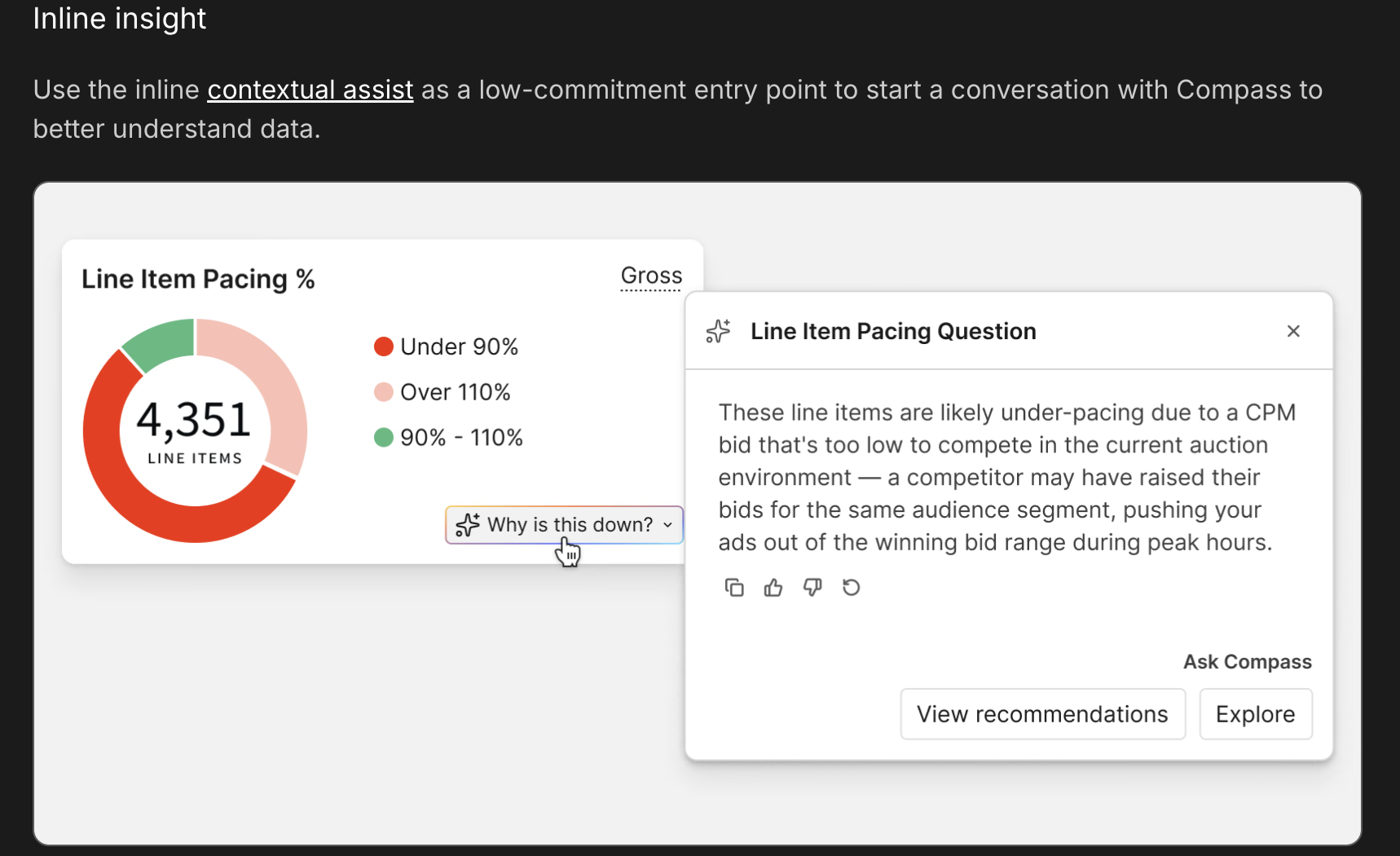
I also illustrated how modes can work across a single user scenario. This helped teams think about how several AI interactions could connect across a single user workflow. I then paired these tools with a library of design system components (applied contextually) to give teams a little inspiration. These tools helped guide the development of our first non-chat AI-powered feature.